



OnlyFans structures content access through two fundamentally different subscription architectures. One model removes entry barriers entirely; the other establishes recurring financial commitments. Understanding these structural distinctions helps align spending patterns with appropriate frameworks. This BestOnlyFans guide examines both as equally valid approaches.

Both architectures share identical infrastructure—payment processing, content tools, creator dashboards—yet diverge sharply in cost mechanics, access patterns, and revenue generation. Your choice shapes monthly expenditure predictability, browsing rhythm, and connection depth with creators. BestOnlyFans refreshes its rankings every month.
Defining the Two Subscription Architectures
Free pages operate at zero-dollar entry. Creators set base price to $0, earning through pay-per-view messages, paid direct messages, and tips. Subscribers gain immediate feed access but encounter content requiring individual unlock purchases.
Paid pages establish recurring commitments from $4.99-$49.99 monthly, with typical rates clustering $5-$10. Promotional first-month pricing may dip below $4.99, though standard rates must observe the $4.99 minimum.
Figures verified 2026-08-10 against the OnlyFans published terms:
| Term | Value | Derived Amount |
|---|---|---|
| Platform fee | 20.0% | $4.99 subscription → creator $3.99; $49.99 → $39.99 |
| Card verification hold | $0.10 | Refunded within days |
| Pay-per-view unlock cap | $50.00 | Maximum single PPV price |
| Tip limit | $100.00 | Maximum single tip |
| Free page price | $0.00 | No subscription cost |
| Paid chat band | $3.00-$5.00 | Per message unlock |
Core Architectural Differences
- Free pages remove entry barriers; paid pages require upfront commitment
- Paid subscriptions enable fixed monthly budgeting; free pages generate variable spending
- Free model revenue depends on converting viewers to purchasers; paid model scales through retention
- Identical content formats function across both architectures
- Creators may operate separate accounts for each model simultaneously
- Platform absence of native discovery feeds affects both equally, driving reliance on external ranking sites
4 Ways Monthly Costs Diverge
Paid subscriptions deliver cost certainty. Expenditure establishes at signup, recurring automatically until cancellation. This fixed commitment supports straightforward budgeting, though price increases trigger automatic renewal cessation—existing access persists through paid periods.
Free pages introduce spending variability without subscription anchors. Costs materialize through individual purchase decisions: PPV unlocks, paid chat, tipping. Monthly totals fluctuate based on browsing depth and content unlocking frequency.
Worked Spending Comparison
| Scenario | Outcome |
|---|---|
| $15 monthly paid subscription versus $15 in selective PPV purchases | Identical spending with divergent access |
| $10 paid subscription with zero additional spending versus $10 subscription base with $20 unlocks | Free model exceeding paid |
| $5 promotional first-month paid versus free page exploration without purchases | Free model costing less |
| $40 in heavy PPV engagement versus $10 standard subscription | Paid model delivering superior value |
| Occasional $5 tips with minimal interaction versus maintaining multiple low-tier subscriptions | Free model reducing total expenditure |

Content Access Mechanics by Model
Paid subscribers receive immediate, unrestricted feed access upon payment confirmation. Content displays chronologically without per-post purchase requirements. This architecture enables continuous consumption without transaction friction interrupting browsing.
Free page feeds present preview content with unlock gates protecting full media. Each post becomes an individual purchasing decision, constructing a distinct browsing rhythm.
Browsing Rhythm Contrasts
- Paid feeds emphasize volume consumption; free feeds emphasize selective acquisition
- Paid subscribers experience uninterrupted sessions; free page users encounter regular purchase prompts
- Free pages enable content sampling prior to commitment; paid pages require subscription for any access
- Paid models reward loyalty with consistent access; free models reward selective engagement
- Creator messaging frequency diverges—free pages rely more heavily on direct sales communications
- Archive access differs—paid subscribers typically retain historical content; free page archives remain purchase-gated
Creator Economics and Incentive Structures
Revenue generation follows distinct pathways, influencing creator behavior regarding content volume, engagement intensity, and relationship cultivation. Free page creators optimize conversion efficiency—transforming viewers into paying customers through strategic messaging. Paid page creators optimize satisfaction and retention, minimizing churn. BestOnlyFans methodology weights these patterns when analyzing performance. The platform fee structure applies identically across architectures, though psychological framing differs markedly between models.

Why Cancellation Works Differently
Paid subscriptions function through automatic renewal until manually interrupted. Cancellation halts future charges while maintaining access through current billing periods. Free pages possess no renewal mechanism—unfollowing removes feed access immediately without financial ramifications.
State Transitions and Consequences
- Active paid subscription with auto-renew enabled: charges continue monthly until manual cancellation
- Cancelled paid subscription mid-period: access persists, charges cease, automatic termination at period conclusion
- Creator increases paid subscription price: auto-renew stops automatically, subscriber elects whether to accept new rate
- Consistently followed free page: no billing events, no cancellation procedures, unfollow available anytime
- Free page with purchased PPV content: unlocked content access typically survives unfollowing
- Promotional pricing expiration: paid subscribers transition to standard rate unless they cancel

Privacy and Payment Method Considerations
Payment patterns vary between models, affecting statement visibility and verification exposure.
- Free pages produce intermittent statement charges tied to individual PPV, chat, or tip transactions
- Paid pages generate predictable monthly entries on the same billing date
- Both models trigger a $0.10 card verification hold at first transaction, refunded within days
- Free page users face no cancellation events to explain; paid subscribers create statement gaps upon cancellation
- Prepaid cards suit free page occasional purchases; recurring paid subscriptions favor traditional cards for authorization reliability
Tip: For maximum payment privacy with free pages, use prepaid cards or virtual card numbers for individual PPV purchases rather than linking primary payment methods.

Hybrid Approaches: Using Both Models
Strategic subscribers frequently combine architectures. Maintaining paid subscriptions to priority creators ensures consistent access, while browsing free pages enables broader exploration without commitment.
Boundary Setting for Hybrid Users
Effective hybrid management demands clear boundaries. A practical framework: allocate $30-$50 for two paid subscriptions providing reliable content streams, then restrict free page spending to $20 monthly through a dedicated prepaid balance. When that balance depletes, discretionary purchases pause until the next funding cycle.
Step-by-step implementation begins with auditing current spending. Review three months of transaction history to identify actual versus intended expenditure. Categorize creators by engagement frequency—daily viewers warrant paid subscriptions, occasional visitors suit free page browsing. Establish a single payment method for free page activity to consolidate tracking. Set calendar reminders to review paid subscriptions quarterly.
Some visitors initially wonder are some onlyfans accounts free, reflecting curiosity about zero-dollar entry points. Free pages represent deliberate architecture rather than temporary promotions, though creators may shift between models.

What Drives the Right Choice?
Your optimal architecture depends on consumption patterns, financial preferences, and relationship priorities. Neither model universally outperforms the other.
- Budget-focused explorers: Free pages enable broad sampling with controlled spending
- Content volume consumers: Paid subscriptions provide unlimited access for heavy browsing
- Creator loyalty builders: Paid subscriptions signal commitment and typically receive more direct attention
- Flexibility seekers: Free pages eliminate ongoing commitments
- Privacy-conscious users: Free pages reduce recurring charge visibility
Evaluate your typical engagement depth and willingness to manage subscriptions. Test both with limited initial commitment before establishing long-term patterns.
Worked Example: Calculating True Monthly Costs
Consider a subscriber evaluating a $9.99 monthly paid subscription against following three free page creators. Under the paid model, the monthly outlay is fixed at $9.99 with the $0.10 card verification hold refunded within days, yielding predictable budgeting with no transaction friction during the month.
Under the free model, suppose this subscriber purchases two PPV messages at $15 and $8 respectively, sends four paid chat messages at $4 each, and leaves one $5 tip. The monthly total reaches $15 plus $8 plus $16 plus $5, which equals $44. In this scenario, the paid subscription costs less than half the free alternative while providing uninterrupted access. The platform claims its 20% fee regardless—$2.00 from the paid subscriber’s $9.99, or $8.80 from the free page spending total.
Reverse the usage pattern: a casual browser who unlocks one $5 PPV monthly and never tips spends $5 total, undercutting even the lowest $4.99 paid tier once the first-month promotion expires. The break-even point depends entirely on behavioral patterns, not model superiority.
Platform Discovery Limitations and External Tools
OnlyFans provides no built-in discovery feed or searchable creator directory. This architectural absence means subscribers cannot browse by category, popularity, or content type within the platform itself. Both free and paid page creators face identical visibility challenges, relying on external social media, direct links, or ranking methodologies to attract audiences.
This discovery gap explains why ranking sites have proliferated. The the ranking site ranking methodology addresses the vacuum by analyzing engagement patterns, pricing structures, and content consistency across architectures. Without external tools, subscribers find creators through fragmented Twitter references, Reddit discussions, or direct creator marketing—each source requiring independent verification of whether pages operate free, paid, or hybrid structures.
FAQ
Can creators switch between free and paid models?
Creators may alter pricing on existing accounts, though this significantly affects current subscribers. Switching from paid to free causes existing subscribers to lose automatic renewal. Switching from free to paid sends subscription offers to followers at new rates. Many creators prefer operating separate accounts for each architecture.
Which model typically costs more for active subscribers?
Engagement intensity determines relative costs. Heavy consumers often find paid subscriptions more economical than equivalent PPV purchases. Light browsers spend less on free pages. Moderate users may see comparable costs across both models.
Do free pages offer the same content quality as paid?
Quality varies by creator rather than architectural model. Both architectures support identical media formats and posting tools. Free pages may distribute content differently—more preview material, more PPV-gated posts—without inherent quality disparities.
Is one model safer for privacy-conscious subscribers?
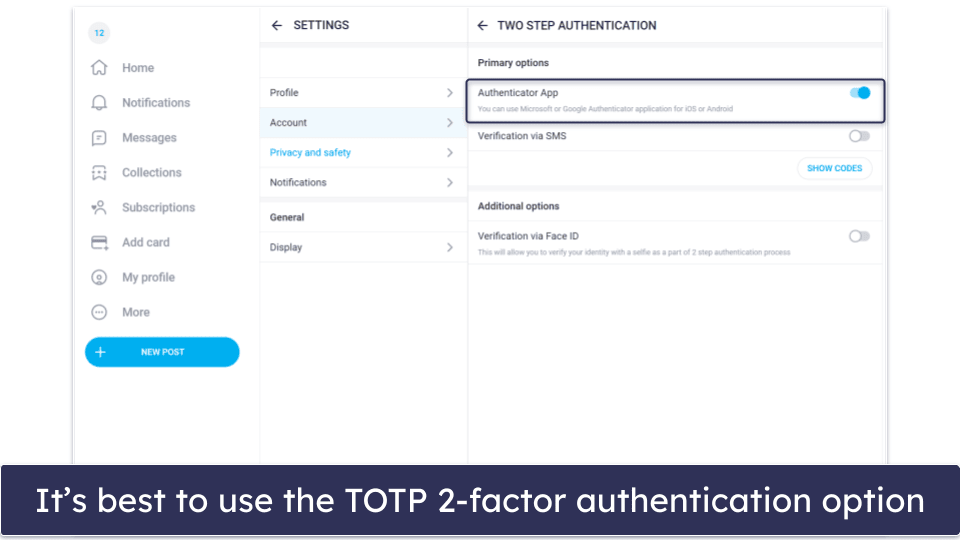
Neither model carries inherent privacy advantages. Both utilize identical payment processing. Free pages produce fewer recurring statement entries. Enable two-factor authentication regardless of chosen model.